

I help tech, B2B, and professional services firms fill their pipeline with qualified leads. I've done search and social media marketing for almost 2 decades — first as a consultant for brands like Tiffany's, Facebook, and McKesson. Then in-house leading Content & SEO at HomeLight and Kickoff.
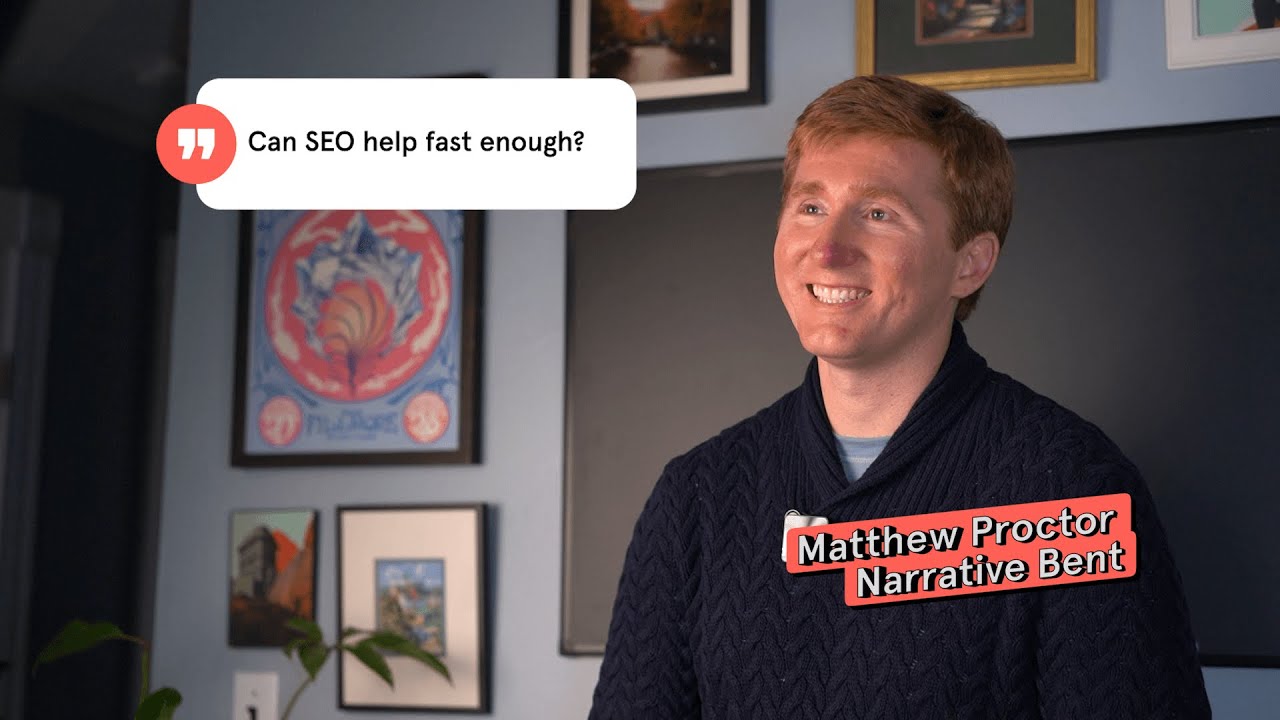
I've done SEO and content for over 17 years, with Fortune 500 companies and in-house teams. I pulled a set of questions from the internet about SEO, AI, and content and answered them on camera.
Almost all forecasts are make-believe. A good agency can at least show you how it got its numbers. There should be logic behind it. A basic version: look at a competitor's traffic, multiply by a click-through rate, and estimate what you'd get if you were successful.
It depends on how mature your SEO program is. If you've built a big content library and you already rank, there are probably projects that could lift pipeline next quarter. Most Series B startups are starting from scratch.
If you're starving for leads, look to channels with a more direct tie to pipeline. SEO is an endurance sport. The earlier you start, the more you gain later. Just don't starve yourself waiting for it.
First, set expectations. A blog usually won't convert as well as a landing page or an ad.
If you get a lot of traffic and almost no conversions, ask whether you're publishing the right content and attracting the right people. Start at the bottom of the funnel. What challenges, obstacles, and buying triggers do your ideal customers have? Cover those on the blog and your conversion rates should go up.
Content does a lot of things, but it has to drive revenue. If it doesn't contribute to attributable revenue, nobody will keep funding it.
All you really need is to break even on your production costs. Once revenue from content covers its cost, all the brand value is a bonus. In the early days of a program, I aim to reach break-even as fast as possible so the program survives the long game.
For website content, start at the bottom of the funnel and work up. If you don't have case studies, services pages, and high-converting landing pages that address buyers' challenges, spend your time there first. Then move up the funnel for more search volume.
There's no perfect percentage. On social, I lean on mid-funnel content. For the sake of argument: 60% mid-funnel, 20% top, and 20% bottom.
Both work with the right team and strategy. For pipeline, SEO is the safest bet, because it puts you in front of people when they're ready to buy. People on LinkedIn are job hunting, selling, or networking. They aren't usually looking for an answer to an immediate problem. Done right, though, LinkedIn can be extremely powerful.
The major platforms (Google, Facebook, LinkedIn, TikTok) have sharply reduced the clicks they send to the open web. Google still sends out a majority, I think around 70%, but AI Overviews and a cluttered results page have cut that a lot.
Traffic still matters. It's just harder to get. Traffic that didn't drive revenue arguably never mattered.
Track leads and revenue first. Is your content influencing your sales team's pipeline? Then clicks and impressions, mostly from search. Then brand: on platforms like YouTube, track engagement (views, comments, reactions, followers, and subscribers), even if those are less useful with today's algorithms. Always bring it back to leads and revenue.
I'm doing this myself, so I empathize. Putting your face on the internet is hard and uncomfortable, and a CEO has plenty of other things to do. It's still a valuable use of time.
Unless your CEO is naturally great on camera and loves promotion, they'll hate it. So manage up. Put a rigorous structure in place, minimize the time they spend, and show how their work ties to the company's strategic goals.
If they can do it, every CEO should create content. Social media is personality-driven, the algorithms favor faces, and a CEO usually stays at the company longer than any other spokesperson. Just assume they'll hate it.
One 5-minute essay every Wednesday from The Narrative, for marketers whose sales cycle is long, product is complicated, and legal has to sign off.
Send me Wednesday's essay →If you’re struggling to get your voice heard, if you’re bandwidth constrained, or if you’re unsatisfied with the generic crap most agencies make — we hear you and we’re here to help.
SCHEDULE A CALL