Strategy
9 Digital PR Campaign Examples and What Made Them Work
9 digital PR campaigns from finance, real estate, and B2B brands, why each worked, and a scorecard to test your idea.

9 digital PR campaigns from finance, real estate, and B2B brands, why each worked, and a scorecard to test your idea.

You need press, but whatever you're doing now isn't working.
Your product announcements go out and nothing runs, the pitches about your latest feature go unanswered, and leadership keeps asking why competitors show up in the trades (and in AI answers) and you don't.
Digital PR is the answer! It's how you give reporters a reason to write about you.
It's original research (a survey, an analysis of your own data, or a round of interviews) that you turn into a story and pitch to the outlets your buyers follow. Reporters cover it because it gives them something new to report to their readers — your future customers.
Done right, the results are hard to match.
Reckon's ranking of Australia's best cities for starting a business earned 91 pieces of coverage, and 76 of them quoted its CEO. Hippo's homeowner surveys went from 41 placements in 2023 to 227 in 2025. And one report we ran for a client helped take a product page from 26 to 105 AI Overview appearances in a year.
Below are 9 digital PR campaign examples from finance, real estate, and B2B brands (3 of them are ours, 6 come from agencies who published their results). In each one, the way the team framed the findings did more for the coverage than the topic itself.
Because in every case the data answered a problem the audience had.
It's original research built to be cited. You run a study, turn it into a white paper, blog post, video, or social series, and then pitch the story to the reporters, writers, and podcasters your buyers follow.
Digital PR is the industry's name for it. I call it content-led PR, because the content built on your research does the heavy lifting.
It does the reporter's homework for them: the data's collected, the analysis is done, and the story's ready to drop into a column. (Newsrooms are stretched thin. Reporters remember who saves them time.)
Of our 3, 2 are client campaigns (1 with the name removed), and 1 is from before I started Narrative Bent. For each one, you'll see the study, the framing, the result, and the lesson worth stealing.
Acorn Finance, a home improvement lending marketplace we work with, sells through contractors, who offer financing to their own customers.
In June 2025, its first survey earned 36 links from 19 sites. The second, a January 2026 survey of how homeowners use AI on home projects, earned 50 links from 33 sites (both counts as of September 29, 2026).

What changed was mostly the pitch.
For the second survey, we framed our findings as upsell and lead-generation intel. If we'd just sent them as "survey findings," nobody would have cared, but once the data was pitched as a way to upsell jobs and find new leads, it connected.
Lesson: Frame the findings around what your audience cares about, even if you surveyed a different group (here, we surveyed homeowners but pitched contractors).
A large brand that sells corporate swag and custom apparel ran a workplace recognition report with us.
The usual move is to point all the coverage at the report itself, but we pointed 11 of its 18 links at a single product category page instead. Between May 2025 and May 2026, that page went from 26 to 105 AI Overview appearances (full case study).
The page now ranks #1 for 3 search terms with about 52,000 combined monthly searches.
In our experience, a report like this keeps earning links and citations for as long as its data stays relevant. So the money page keeps getting attention long after launch.
Lesson: Pick the page you want to lift before you pitch. A campaign can move a money page, too.
Before Narrative Bent, I helped build HomeLight's organic search program.
Every quarter we surveyed top real estate agents about their markets. (Housing reporters love to talk through the ups and downs of the market).
Though they had plenty of transaction data from the big portals (sales, prices, days on market), they had no insight into the sentiment of the folks working those markets every day.
We had hundreds of agents we could call, so each quarter we interviewed them, wrote up a white paper, and pitched local housing press. And when COVID hit, it was the only study talking to agents whose markets had shut down, and the Wall Street Journal picked it up.

Lesson: Read what reporters already cite, then bring them the piece they keep missing.
Reckon, an Australian accounting software company, worked with the agency Prosperity Media to rank Australia's 50 biggest cities by how good each one is for starting a business.
They scored 18 factors, added 800+ survey responses from small business owners, and pitched 24 angles to national, regional, and local journalists. Per Prosperity Media's case study, the story earned 91 pieces of coverage. Of those, 76 quoted Reckon's CEO and 73 linked to the campaign page.
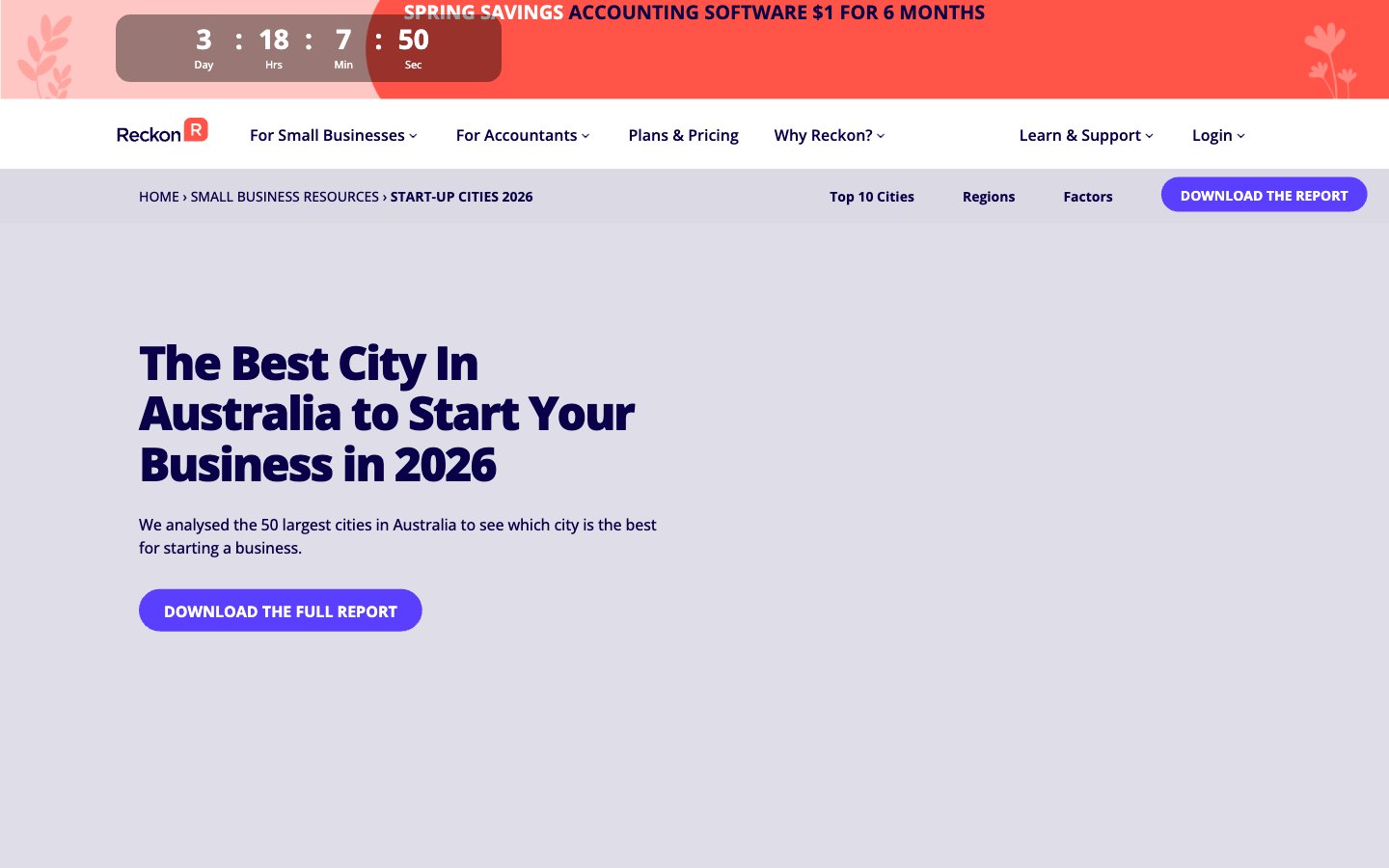
Lesson: One dataset can carry dozens of local stories if you cut it by region first.
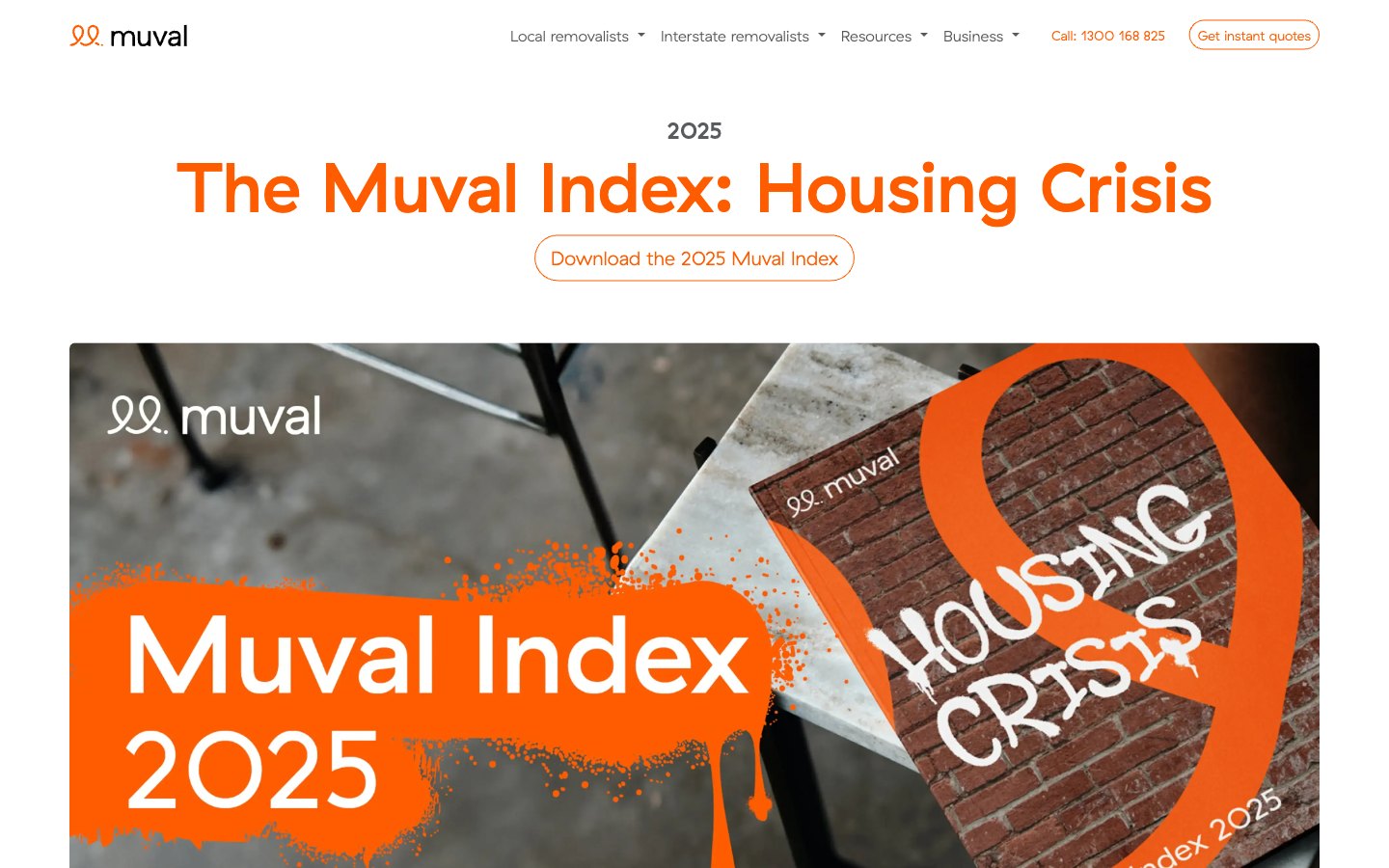
Muval, an Australian platform for booking moving companies, publishes an annual index of where people are moving, and its agency called the earlier editions "dense and difficult to interpret." (Points for honesty.)
For 2025, the team brought in population geographers at the University of Queensland, worked through 400,000+ de-identified move records, and swapped an internal ranking for 2 plain metrics.
Then they tied the findings to cost of living and housing. The case study reports 69 pieces of online coverage and 8% more clicks than the quarter before.
Lesson: If your data's already good, change how you present it before you change the study itself.
Hippo, a home insurance company, had run homeowner surveys with Siege Media for years, on topics like winter damage, homeowner regrets, and fixer-uppers versus move-in-ready homes.
By publishing new surveys steadily year after year, it was able to grow its coverage. Per Siege Media's case study, placements went from 41 in 2023 to 124 in 2024 and 227 in 2025. In late 2025, it moved to fewer, deeper surveys that could each carry several stories.

Lesson: Reporters warm up to a source that keeps coming back with something new.
Lance Surety Bonds, a surety bond provider, worked with the agency Fractl on a survey of 1,000 drivers about road rage. The top line (88% of drivers admitted to road rage) is easy to skim past on its own.
So the team cut the answers by the car each driver owns and the music they play behind the wheel. Indie fans came out angriest, with 96% saying they'd seen red while driving, and BMW and Tesla were the brands most likely to set other drivers off (A Journal of Musical Things ran with the music angle).
Per Fractl's write-up, the survey earned 77 backlinks from 46 referring domains, including TheStreet and 40+ regional outlets across several states.

Lesson: Cut your data by something readers already identify with, like the car they drive or the music they love.
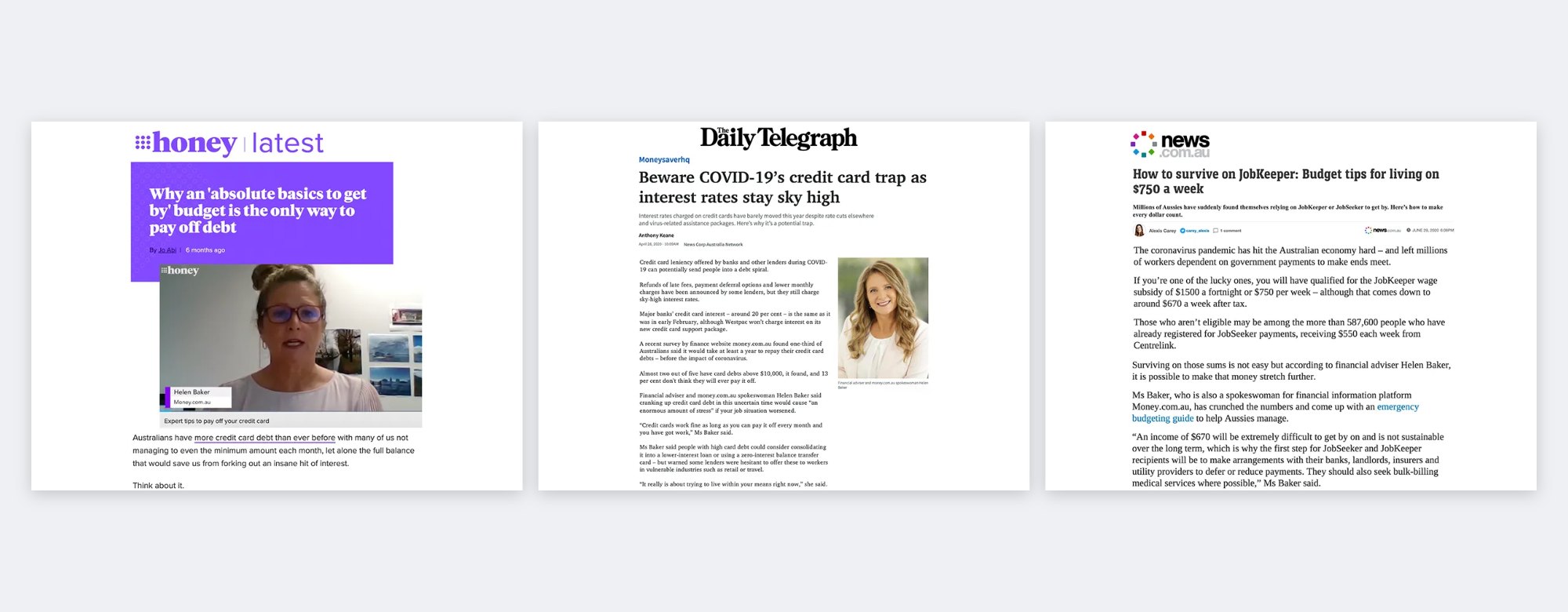
Money.com.au, an Australian online financial marketplace, had a problem: its team was offshore, so there was nobody local for reporters to call. Its agency, The Ideas Suite, brought in Helen Baker, a well-known financial adviser, to be the brand's face in the media.
Her commentary went out alongside consumer and business surveys, money-tips listicles, and whitepapers built to earn links. Per The Ideas Suite's case study, the first 8 months brought 644 pieces of coverage and 91 backlinks, with outlets like the Daily Telegraph, News.com.au, and Business Insider.
Lesson: Data gets you in the door, and a credible person to quote keeps you in the story.
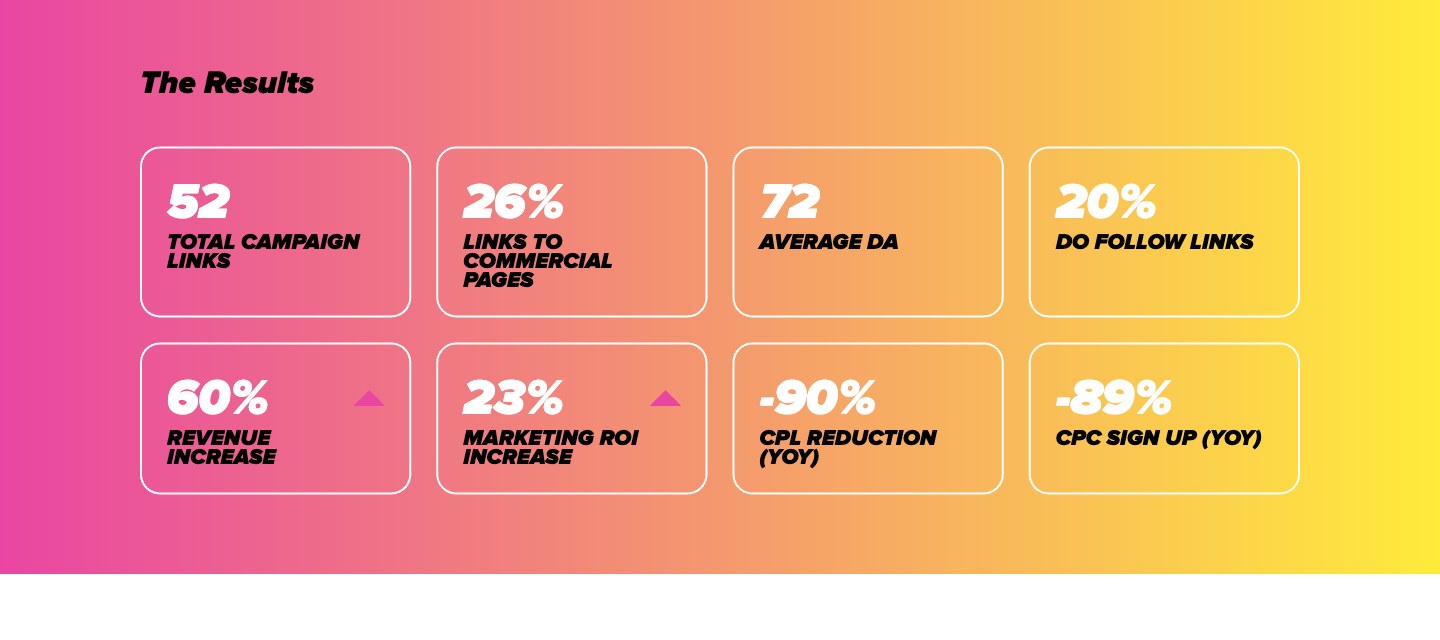
Better.co.uk, a UK online mortgage broker, cut its marketing spend by 58.4% during a downturn and kept digital PR as its only organic channel. Its agency, JBH, pitched data-led homebuying stories and expert mortgage commentary, and aimed links at the pages that sign up customers.
Per JBH's case study, 26% of the 52 campaign links pointed at commercial pages. Year over year, revenue rose 60% and cost per lead fell 90%.
Lesson: Tie your PR to the pages that make money, and it holds up when budgets get tight.
Because framing decides whether a reporter can use your data at all.
Ok, sure, the topic matters, and a boring question gets boring answers. But in my experience, the story you pull out matters more, and so does who you hand it to.
A reporter wants a story their readers need, and those readers have problems to solve, so every finding you pitch should help someone solve one. Acorn Finance's homeowner data became a contractor story about upsells. My HomeLight agent surveys became a story about how buyers and sellers felt.
Try this on your own study. For each headline finding, write one sentence that starts with "This helps [audience] decide..." If you can't finish it, keep digging before you pitch.
For a deep study, 5 to 10 placements is a good result, and zero means something broke (the topic, the framing, or the pitch list). Results swing with the story, the industry, and the outlets, and anyone guaranteeing you a placement count is lying.
Expect less from your first campaign, though. Reporters don't know your brand yet, and a study from a company they've never heard of reads like marketing, so your first campaign is lucky to get any traction at all.
Around the third or fourth quarterly study, that changes: reporters start treating you like a source, and some start coming to you. (Hippo's placements roughly tripled from 2023 to 2024, the same pattern in public numbers.)
Pitch list size matters, too.
BuzzStream studied more than 31 million outreach emails and found that campaigns pitched to 51 to 100 people averaged 12.08 links, while campaigns of 1,000+ emails earned 70% fewer pieces of coverage. BuzzStream calls this correlative, but it matches what we see: a short, researched list beats a blast.
Most campaigns that underdeliver fail in 1 of 3 ways. We've hit all 3 ourselves, usually in a client's first year.
The first one is the easiest to avoid and the most tempting to ignore. Treat your study the way a newsroom would. You choose what to publish, so if a finding doesn't flatter you, leave it out.
Let me make this extremely clear:
If the data is bad for your brand, don't run it. Never bend it.
Even with zero placements, you still own the research. Publish it on your own site, and Google and AI assistants can find and cite it. Then put it to work everywhere else:
One accounting SaaS client of ours turned its AI-in-accounting report into 165 leads for sales. It covered the study in a webinar, its sales team invited prospects and customers, it ran ads around the report, and we sent a few email blasts to its list.
Read the full case study.
Think of it like renting versus buying a house. A trade placement is rented attention that's gone in a week, while the study is equity that pays out as long as the data stays relevant. Earned media is an accelerant that pours gasoline on a good study, but you can build plenty of momentum by publishing it yourself, since social algorithms are good at finding the people who care.
And now that AI can spit out endless generic content, original research is one of the few things a competitor can't copy.
Yes, as long as reporters cite you because they want to. Muck Rack analyzed more than 25 million links cited by ChatGPT, Claude, and Gemini, and earned media made up 84% of the citations, while paid content made up 0.3% (May 2026).
Google's guide to AI search says its AI features "can show what's being said about products and services across the web." It also warns that "seeking inauthentic 'mentions' across the web isn't as helpful as it might seem." A study reporters choose to cite is the kind of mention Google means.
You can see it in the large-brand example above. As campaign links pointed at one product category page, its AI Overview appearances went from 26 to 105 in a year. That's one page at one client, so I wouldn't treat it as a forecast.
Start with your buyer and work backward to the story. For our most recent campaign with a large brand, the topic brief ran 32 slides before we got to a single idea.
Here's what goes into it:
Step 5 is where a lot of companies get stuck. They go looking for something only they have, like order data or a well-known expert, and find nothing worth releasing.
Fair enough; most companies are in that spot.
If that's you, the research itself becomes the thing only you have, so treat it as its own product. Give it a budget, a plan, and the same standard you'd hold anything else you sell to. That matters because a reporter won't cover a survey just because your company ran it. The findings have to be worth their readers' time.
Data is the most common hook in this kind of coverage. Reboot Online classified more than 371,000 articles from digital PR coverage. Data campaigns made up 42.3% of the coverage it could classify by type. Surveys made up another 19.3%.
By the end of the topic work above, you'll have a handful of ideas that all sound good in a meeting. The harder call is which one will hold up in front of a reporter, and you want to make it before you spend money and months on a launch.
The 10 checks below come from the campaigns earlier in this post. Reckon and Lance Surety Bonds pass the one about cutting data by region or segment, Acorn Finance passes the one about helping your buyer decide something, and Hippo passes the one about running it again. In our experience, the ideas that come up empty usually miss several.
Run your idea through the table before you pay for a survey panel. If you hit several red flags, go back to step 5 above and look again at what only you have.
| Test | Ask yourself | Good answer | Red flag |
|---|---|---|---|
| New | Is it new to the reporters who cover your buyers? | It gives them something they want and never get | It repeats what the big data providers publish |
| Useful | Does each finding help your buyer decide something? | You can finish the sentence "This helps [audience] decide..." | It's interesting but changes nobody's next move |
| Broad | Is it broad enough for more than one outlet? | National, trade, and local outlets could use it | Only one city's paper would care |
| Honest | Would you publish it if it made you look bad? | Yes, or you'd skip that finding | The questions were written so your product wins |
| Bold | Does it take a position? | The headline surprises someone | The headline repeats what everyone already assumes |
| Defensible | Can you defend the method? | You can say who you asked, how many, and when | You can't say the sample size |
| Segmented | Can you cut it by region, role, or segment? | You have 5+ local or trade angles | One national number, nothing else |
| Linked | Does it point to a page you want to rank or be cited? | You've picked the page for the links | Coverage will link to your homepage, if at all |
| Sales-ready | Will sales use it? | Sales helped pick the questions | Nobody in sales has seen it |
| Repeatable | Can you run it again next quarter? | It's a series with a trend line | It's a one-off |
To judge the result: zero placements is a failure, and 5 to 10 is good for a deep study. Your first campaign will probably earn fewer.
Start with the scorecard. If your idea passes, you're ahead of most campaigns in those agency galleries.
Full disclosure: content-led PR is one of the things we sell, and I'd rather you run one good study than three forgettable ones. If you want us to look at your idea, or help you find one, talk to us about a content-led PR campaign.

Led content and SEO at HomeLight from Series A to a $1B valuation.
I've worked in SEO for 16 years, and I've always measured it in revenue. I was employee #27 at HomeLight, where I led content and SEO and grew the team to about 30 people as the company went from Series A to a $1B valuation. Before that, I ran enterprise SEO programs at BrightEdge and Catalyst. In 2023 I started Narrative Bent to do the same work for proptech, fintech, and B2B companies with long sales cycles.
Blog leads a month in 10 months, in a rough housing market.
Demo requests from 1 webinar we built and promoted.
The content and SEO program our founding team built.
See who AI recommends when your buyers ask.
We'll ask ChatGPT, Perplexity, and Google AI Mode 5 questions your buyers ask and send you a free 1-page Snapshot with a short video walkthrough.
The newest posts from the same topic.
9 digital PR campaigns from finance, real estate, and B2B brands, why each worked, and a scorecard to test your idea.
Find which of 4 patterns burned you, then hire the next SEO agency on a 30-day strategy month you own.
A year of client work changed my mind about GEO as a discipline. I still think the shortcuts are a waste of money.
How to compare content agencies in 2026, what to ask them, and which kind of agency fits which kind of company.
Backlinks, internal links, blog length, author bios, agencies, and whether SEO is snake oil. 17 years of answers.
Traffic forecasts, blogs that don't convert, funnel mix, SEO vs. LinkedIn, and whether your CEO should make content.
3 things that give you the best shot at a mention or link in Google's AI Overviews right now.
A comparison page, an original survey, and a loans content program. 3 times our clients got into AI Overviews.
The search funnel marketers relied on is broken. How we're rethinking the website, discovery content, and SEO.
Content teams rewarded for clicks and impressions end up on the chopping block. Align the team on leads and revenue.
5 checks for using AI in marketing without losing quality, trust, or your brand's voice.
Matt McGee on how The Walkthrough podcast grew from 0 to 5K listeners at a real estate tech company.
Fewer searches end in a click every year. What that means for where your content needs to show up.
What Databox CEO Peter Caputa gets right about content-led growth and social selling.
Readers can tell when copy was written by AI, and it makes them trust you less.
Skip the algorithm chasing. Talk to customers, answer their questions, and earn attention.
People use every platform to learn about everything, including the topics your buyers care about.
What a steady content and link program built for a fitness startup, with no growth hacks.
How a startup can build content and SEO into a multimillion-dollar channel, starting with the first hire.
The salaries, vendors, and 3 to 4 years of patience behind a $1M content program that paid back more than 10X.
Most technical SEO fixes won't move revenue. Content and links do most of the work.
Almost 90% of our writer applicants skipped the writing samples. Here's why that matters.