Strategy
9 Digital PR Campaign Examples and What Made Them Work
9 digital PR campaigns from finance, real estate, and B2B brands, why each worked, and a scorecard to test your idea.

Backlinks, internal links, blog length, author bios, agencies, and whether SEO is snake oil. 17 years of answers.
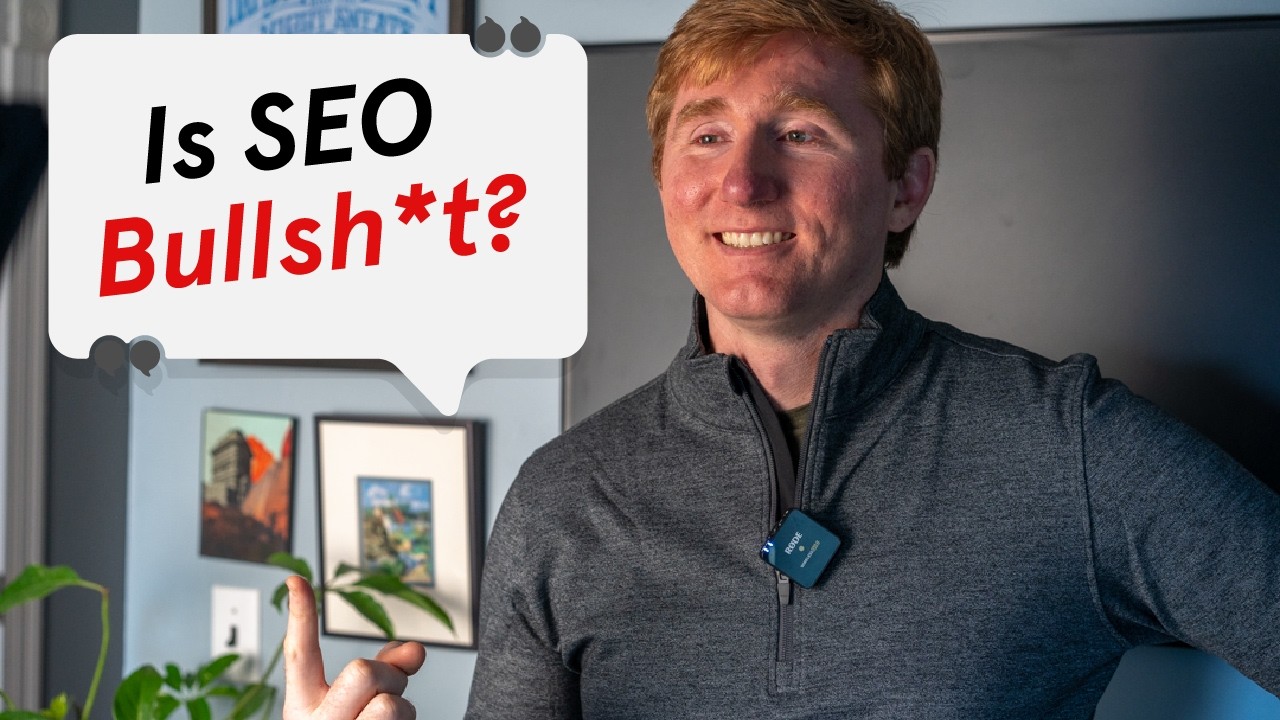
I've run content marketing and SEO teams for 17 years. I pulled real SEO and content questions from the internet and answered them on camera. Here's what I said, cleaned up for reading.
Getting backlinks is not fun. It's probably the biggest grind in this business. You dig through the internet for the right contact, send email after email, make phone calls, negotiate, confirm the link, and then try to measure whether it did anything.
But it works. No matter how much Google says not to worry about it, getting other websites to put a contextual, relevant link to your pages is one of the biggest correlations I've seen with improved SEO performance.
10 or 15 years ago I'd have said 10% of SEO impact comes from your own site (the content and technical changes) and 90% comes from who links to you, how many, how often, and about what. That ratio has shifted. Today I'd call it closer to 60/40 in favor of links.
Link building should look a lot more like PR now. Getting talked about in credible press outlets. Not blogger link exchanges, directory links, or the growth hacks from the early 2000s. Good link building is good PR and good brand building.
One more thing. As AI takes up more of the search results, we're seeing the links we build for clients affect how large language models mention those clients. The models ingest every page they can and synthesize a summary. The more people talk about your content and your company, the more material those models have. We've seen a correlation between the links we drive and how often clients show up in brand mentions, citations, and AI Overviews.
Internal links are the links on your own website: your navigation, your sitemap, the links between your pages. They're incredibly important. Make sure Google can crawl them, and use them to say clearly which pages matter so they get found.
It doesn't matter. Word count is irrelevant. A post needs to be as long as it takes to make its argument or deliver what the headline promised.
I've seen posts under 100 words work because they answered a basic question. I've also published giant ebooks as blog posts because that's what it took to compete on the topic. Stop worrying about word count. Make sure the post delivers enough value to earn the click.
There's no right answer on the number. What matters is that you have them. Author bios have become more important as Google and large language models look for credibility signals. Use a real person with real subject matter expertise, and link the bio to their other author pages and social profiles.
There's an agency model I'd call churn and burn, and it's particularly bad in SEO. During the sales process they bring in their heaviest hitter, the expert who has solved every problem you can imagine. Then that person never works on your account.
In the first month or 2 they set up keyword tracking and reporting, run a tech audit, and hand you a lot of information. After that, execution stops and everything becomes maintenance. You keep paying a monthly fee because you don't know what SEO should look like. Eventually someone realizes you're getting rankings and no revenue, and you fire them. They're fine with that, because they sign new clients faster than they lose old ones.
This hits small businesses hardest: restaurants, plumbers, and contractors on small retainers. These days I tell people straight up: if you're paying less than $5,000 a month for SEO, you're probably not competitive, and you run the risk that your agency isn't doing the work.
I've heard this my entire career, and I built a lot of that career trying to prove it wrong.
It's complicated. Some people practicing SEO aren't doing anything of value, and that poisons the whole industry. The good SEOs, the ones in the grind making meaningful changes, have a serious impact on a business's bottom line. I've seen entire companies grow off the back of a good SEO program.
I started as a copywriter and stumbled into a community of people building niche sites for passive income. That's where a lot of SEO started, and a lot of the early industry overpromised and underdelivered. I built my own sites and they worked, but only well enough to make a few thousand dollars a month in ad revenue. So I moved into consulting and agencies, working with bigger and bigger brands.
I kept hearing the same thing: we don't believe this channel works. Around 2013 or 2014 I decided to prove them wrong. I went in-house at a small startup and led SEO and content for about 6 years. I built a content and creative team around the practices I'd been preaching. It made the company millions of dollars in revenue every year and brought in millions of potential customers every month.
If you still think modern SEO is snake oil, look at how much big companies spend on it year after year. They wouldn't keep spending billions on something that doesn't work. It takes time, and it takes practitioners who know what they're doing and can push change through your organization: on the website, in PR, and in the product. It's not snake oil. It's hard.
Have a marketing question? Send it to me on LinkedIn and I'll try to answer it.

Led content and SEO at HomeLight from Series A to a $1B valuation.
I've worked in SEO for 16 years, and I've always measured it in revenue. I was employee #27 at HomeLight, where I led content and SEO and grew the team to about 30 people as the company went from Series A to a $1B valuation. Before that, I ran enterprise SEO programs at BrightEdge and Catalyst. In 2023 I started Narrative Bent to do the same work for proptech, fintech, and B2B companies with long sales cycles.
Blog leads a month in 10 months, in a rough housing market.
Demo requests from 1 webinar we built and promoted.
The content and SEO program our founding team built.
See who AI recommends when your buyers ask.
We'll ask ChatGPT, Perplexity, and Google AI Mode 5 questions your buyers ask and send you a free 1-page Snapshot with a short video walkthrough.
The newest posts from the same topic.
9 digital PR campaigns from finance, real estate, and B2B brands, why each worked, and a scorecard to test your idea.
Find which of 4 patterns burned you, then hire the next SEO agency on a 30-day strategy month you own.
A year of client work changed my mind about GEO as a discipline. I still think the shortcuts are a waste of money.
How to compare content agencies in 2026, what to ask them, and which kind of agency fits which kind of company.
Backlinks, internal links, blog length, author bios, agencies, and whether SEO is snake oil. 17 years of answers.
Traffic forecasts, blogs that don't convert, funnel mix, SEO vs. LinkedIn, and whether your CEO should make content.
3 things that give you the best shot at a mention or link in Google's AI Overviews right now.
A comparison page, an original survey, and a loans content program. 3 times our clients got into AI Overviews.
The search funnel marketers relied on is broken. How we're rethinking the website, discovery content, and SEO.
Content teams rewarded for clicks and impressions end up on the chopping block. Align the team on leads and revenue.
5 checks for using AI in marketing without losing quality, trust, or your brand's voice.
Matt McGee on how The Walkthrough podcast grew from 0 to 5K listeners at a real estate tech company.
Fewer searches end in a click every year. What that means for where your content needs to show up.
What Databox CEO Peter Caputa gets right about content-led growth and social selling.
Readers can tell when copy was written by AI, and it makes them trust you less.
Skip the algorithm chasing. Talk to customers, answer their questions, and earn attention.
People use every platform to learn about everything, including the topics your buyers care about.
What a steady content and link program built for a fitness startup, with no growth hacks.
How a startup can build content and SEO into a multimillion-dollar channel, starting with the first hire.
The salaries, vendors, and 3 to 4 years of patience behind a $1M content program that paid back more than 10X.
Most technical SEO fixes won't move revenue. Content and links do most of the work.
Almost 90% of our writer applicants skipped the writing samples. Here's why that matters.